
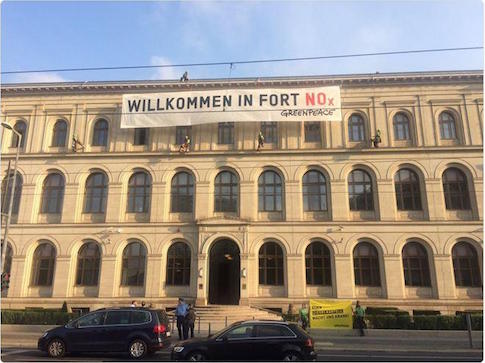
Managing editor Alastair Sloane has been overseas talking to electric vehicle (EV) groups, specifically the Norwegian EV Association, which has spearheaded the growth of EVs in Europe. He was in Berlin, on the sidelines of protests over the effects of diesel pollution, the result of which is further boosting sales of EVs.
The sale of diesel cars in Germany last month fell by 13 per cent, continuing a month-on-month slide that prompted emergency meetings in Berlin of the country’s politicians, carmakers and transport bigwigs.
The meetings were aimed at finding ways to cut harmful nitrogen oxide (NOx) exhaust emissions and prevent inner city driving bans.
A recent court ruling in Stuttgart, the home of Daimler (Mercedes-Benz) and Porsche, cleared the way for such bans in Germany.
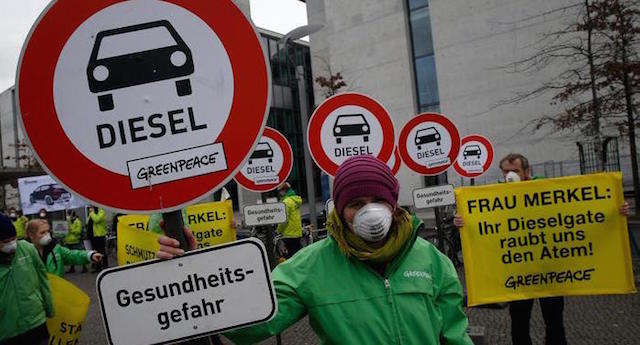
Carmakers have agreed to retrofit software to further cut NOx, but they balk at pressure to change hardware. The cost would be too great.
Volkswagen chief executive Matthias Muller told a news conference: “We consider it out of the question to carry out hardware retrofitting. It is questionable what the result would be.
“I would like my engineers to work on future-oriented technologies – not working on motors that are 10 to 15 years old.”
The sales slump of diesels in Germany hit hardest in April, where they plunged almost 20 per cent. In the UK, diesel sales this year are down around 27 per cent. France reports a similar fall. So do other European countries, as concern over the effects of diesel NOx pollution, especially in inner cities, heightens.
The European Commission says air pollution leads to 400,000 deaths each year. Annual deaths from two pollutants alone, NOx and fine particles, are around 70,000 – three times more than Europe’s road deaths.
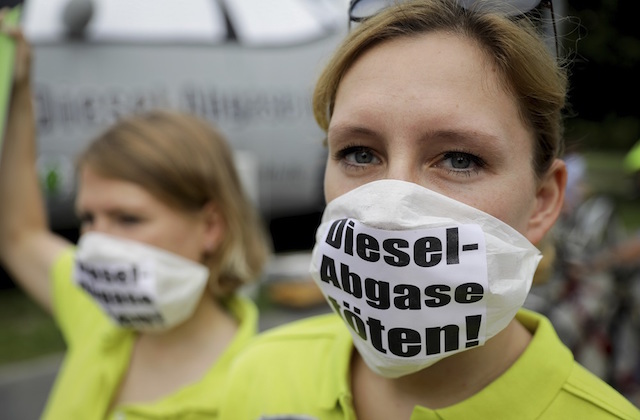
A European Union study says car contribute 40 per cent of nitrogen oxide in cities. The study links increasing NOx pollution with the diesel engine.
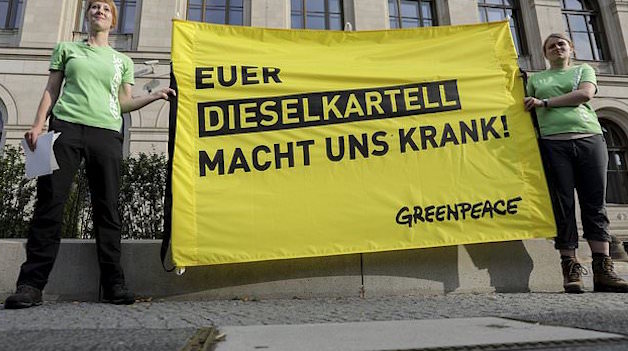
Further, the German Federal Cartel Office is looking into allegations that Daimler, BMW, Audi, Porsche and Volkswagen (Big Five) have been working together for years, meeting in secret to set standards.
VW last year voluntarily declared its “participation in suspected cartel infringements.” The VW statement said the Big Five have coordinated matters to the development of their vehicles, costs, suppliers and markets “for many years – at least since the 1990s and to this day.”
It is claimed that agreements among the Big Five ultimately ensured that emissions from diesel vehicles were not cleaned as effectively as would have been technically possible.
The Big Five face severe financial penalties if it is proven that they colluded to minimise how much money they spent on emissions equipment.
The VW diesel emissions scandal of a couple of years ago has turned into an industry-wide meltdown in Germany. VW admitted it used cheating software to blindside exhaust emissions tests. It has agreed to pay US$22 billion in the United States in fines and settlements.
Audi and Porsche have since been under investigation. And it was reported last month that Daimler in the past 10 years sold around one million cars it knew emitted more harmful NOx than permitted by law.
Files secured in raids on its Stuttgart headquarters in May suggest diesel engines fitted to the Mercedes-Benz C-, E-, and R-Class cars filter out up to 99 per cent of NOx on test beds, but as little as 35 per cent on the road. German investigators are confident they will soon turn up a wider web of fraud.
The country’s environmental groups say they will continue to fight car lobbyists who claim that the new Euro6 emissions requirement solved the NOx question. Professor Ferdinand Dudenhoffer, a leading car analyst at the University of Duisburg, says Euro6 diesel engines don’t meet NOx limits in 90 per cent of cases.
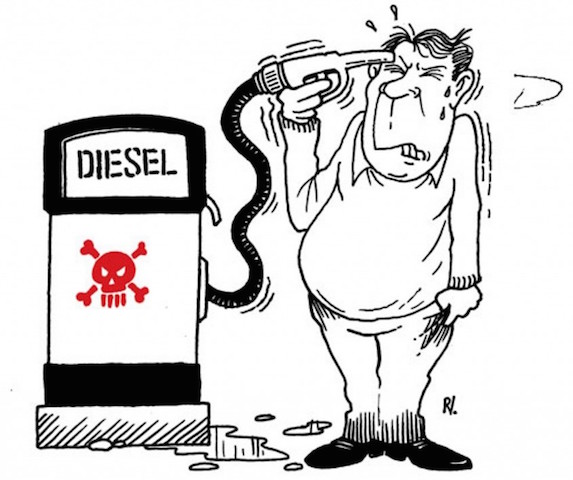 Even the ADAC, Germany’s equivalent to the Automobile Association, has warned its members to hold off buying a car until at least next month. That’s when the “real driving emissions” (RDE) tests come into effect in the EU and when Euro 6D models, which have undergone more stringent, on-road tests, come on the market.
Professor David Bailey, of Aston University in Britain, says the new test standard will make diesels more expensive to make. “It will mean a lot of diesel cars disappearing, because it won’t be worth it for the manufacturers,” he says.
“I think a substantial reorientation will take place away from diesel, part of a larger shift away from the combustion engine towards electric cars in the 2020s.”
Carmakers in Germany have 800,000 employees. Millions more jobs, in Germany and around the world, depend on that country’s automotive industry. Diesel has been good to it.
The growth of diesel cars in Germany took off around 30 years ago, borne by government subsidies on the back of carmakers’ promises of cleaner diesel engines. Carmakers lobbied lawmakers to accept laboratory emissions results rather than on-road results.
In 1990, 11 per cent of Germany’s cars were diesels. In 2015, diesel’s share was just under 50 per cent. Two years on it’s 40 per cent and falling.