
An energy supply company executive accused Toyota NZ of not being ready to meet the market for electric vehicles (EVs).
“What’s that mean?” company CEO Neeraj Lala asked the woman. She replied: ‘Why are you so behind on EVs?’
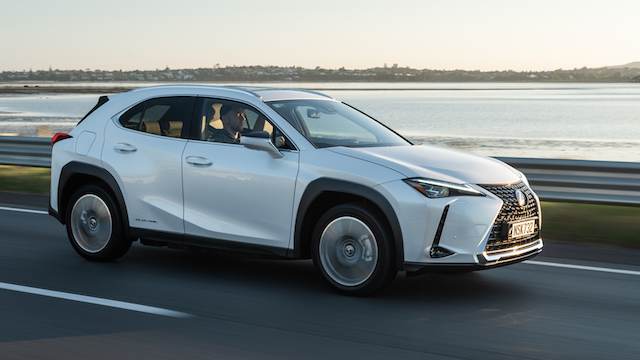
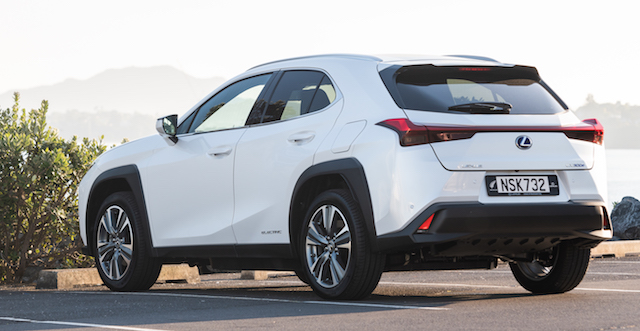
Lala told the story at the launch – via the online Zoom platform – of Lexus’ first battery-electric model, the UX300e, a mid-size SUV, pictured here. (More on a curious aspect of the UX300e at a later date).
He went on: “I said to her, ‘if we sold 30,000 EVs do you think you’d have enough power to power them all at 6pm when people plug them into the walls? She went ‘Yes.’”
Lala said he later “very cheekily” sent the woman a note after a power shortage caused blackouts in New Zealand. It read: ‘Are you truly ready?’
Strengthening the grid to ensure future electricity demand can be met has been “absolutely” part of Toyota’s submissions to the Government’s Emissions Reduction Plan (ERP), said Lala (pictured here).
The ERP is a Government roadmap of sorts in the drive to cut the country’s greenhouse gas emissions. But it says little about beefing up the grid for future needs, despite studies showing peak demand for electricity in New Zealand could grow by 40 per cent by 2040.
EV leader Norway is strengthening its existing hydro-electric supply chain to meet future demand because, says its government, “it takes too long to plan and approve new grid installations.”
Toyota’s Lala believes New Zealand’s future power management will be at a level commensurate with demand for EVs. “When I say demand for EVs, it will also be commensurate with the supply of EVs,” he said.
“We are not going to see where 90 per cent of the cars coming on boats into Auckland in the next two years are EVs that require a huge demand on the grid. It just won’t happen. They won’t come in in a scale that’s going to put pressure on infrastructure.”
The ERP takes effect from April 1 next year with the introductory stage of the Clean Car Standard, a Government policing of C02 exhaust emissions from imported new and used vehicles. Its official start date is April Fools’ Day, 2023.
The light vehicle fleet average in New Zealand today is 171 grams of C02 emissions for every kilometre driven. The ERP wants it at 145gr/km by 2023, 105gr/km by 2025, and 63.3gr/km by 2027.
Even 145gr/km will require a “seismic shift” from the industry, says Lala. As for the 2027 target: “I don’t believe (it) is realistic or achievable for most car companies.” Lala also doesn’t believe Government will agree to amend its C02 objectives.
Carmakers that fail to meet the new emissions standards will have to fork out a penalty. It’s a tax that will be added to the price of the vehicle. The consumer will pay it and the Government will get it.
The maths on the emissions levels of some vehicles has already been done: for instance, the price of New Zealand’s most popular model, the Ford Ranger ute, is expected to rise by as much as $4600.
Average light vehicle emissions in 2011 were 192gr/km. They are now 171 gr/km. That’s a cut of 11 per cent in 10 years. Now the Government wants average emissions cut by 63 per cent in five years.
Both Labour and National coalitions over nearly a quarter of a century have been throwing pixie dust at warnings that the country’s car fleet was getting dirtier. In 1999, 56 per cent of used imports from Japan and elsewhere were eight years old or more, up from 44 per cent in 1998.
Analysis back then by the National Institute of Water and Atmospheric Research (NIWA) found that the average eight-year-old car produced two-and-a-half times as much hydrocarbon and over five times as much nitrogen oxides as the average new car.
In 2006, the then Labour coalition government’s Climate Change Minister David Parker (the current Attorney General) told the NZ Herald that further action was needed to meet climate change objectives.
“The energy outlook to 2030 shows that if we do not change our policy settings, transport greenhouse gas emissions will increase by 45 per cent over the next 25 years. We cannot, and will not, let that happen,” he said.
Fifteen years on from 2006, panic has replaced policy.
The ultimate target date for cleaner air is 2035, when the Government proposes new petrol and diesel light vehicles be banned. Thereafter it wants zero-emissions models only in the new fleet.
Toyota NZ instead proposes the Government aim for 30 per cent of light vehicles being zero emissions by 2035. “A target of 30 per cent is preferable to a date for banning further importation of ICEs (internal combustion engines),” its submission says.
“Achieving 30 per cent by 2035 will, however, be challenging. Based on the current fleet size, this would require around 1.1 million vehicles to be zero emissions by 2035. With currently only around 0.008 per cent of the fleet being BEVs, the scale of the change required cannot be underestimated.
“We think the policy approach should be to explicitly agree on the percentage of new zero emissions vehicles entering the fleet before a decision is made to prohibit ICEs.
“If Toyota is going to contribute most effectively to New Zealand’s climate challenge, we need a stable, predictable policy environment to help us on the way, and the targets set out need to be sustainable and achievable.”