
• Skip to main content
  • Skip to secondary menu
  • Skip to primary sidebar
  • Skip to footer

AutoNews.NZ

  • Home
  • News
  • Reviews
    • Medium-sized cars
    • Small cars
    • Large cars
    • 4x4s
    • People-movers
    • SUV-large
    • SUV-luxury
    • SUV-medium
    • SUV-compact
    • Sports cars
    • Luxury cars
    • Hybrid cars
    • Ute
  • Cars & Watches
  • Bike World
  • Tech
  • About Us
  • Videos
    • Spy videos
Home » Car-hacking: carmakers tried to block research findings, security conference is told

Car-hacking: carmakers tried to block research findings, security conference is told

August 18, 2015 by Alastair Sloane

Carmakers have spent the past three years trying to hide a report into how electronic key fobs were easy prey for car hackers, a security conference in the US is being told.

The car companies learned in 2012 of the study but sued researchers to stop them from publishing findings. Now the paper is being presented at the USENIX security conference in Washington, DC.

Researchers in Britain and the Netherlands found flaws in electronic locks and immobilisers that put thousands of different cars at risk of car-hacking.

Their findings go a long way to supporting a police report in London that claims 42 per cent of stolen vehicles in the city are being ‘keylessly’ hacked. BMWs and Range Rovers are particularly at-risk, it said.

Roel Verdult and Baris Ege from Radboud University in the Netherlands and Flavio Garcia from the University of Birmingham, in Britain, found the weakness in the Radio-Frequency Identification (RFID) transponder chip used in immobilisers.

They reported how the cryptography and authentication protocol used in the Megamos Crypto transponder can be targeted by tech-savvy criminals.
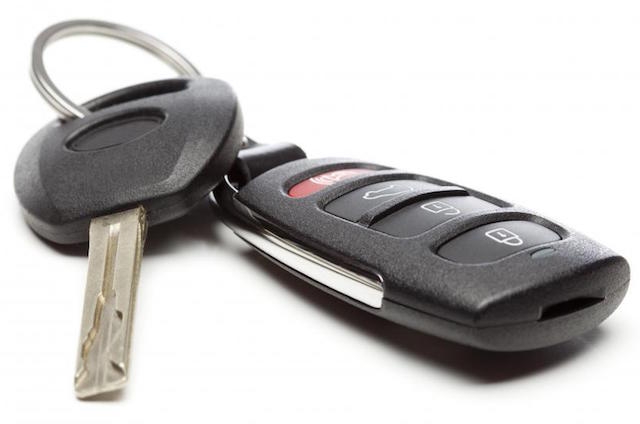
set-of-car-keys-against-white-backgroundThe Megamos is one of the most common transponders, used in high-end brands including Audi, Porsche, Bentley and Lamborghini, as well as Fiats, Hondas, Volvos and Maseratis.

The Megamos Crypto is not the only vulnerable immobiliser; others like the DST transponder and KeeLoq have both been reverse-engineered and attacked by security researchers.

The research team first took its findings to the maker of the Megamos chip in February 2012 and then to Volkswagen in May 2013. VW owns Audi, Porsche, Bentley and Lamborghini and filed a lawsuit to block the publication of the paper.

Immobilisers are electronic devices that stop a car’s engine from running unless the key fob with the correct RFID is nearby. But they can be bypassed by amplifying the signal.

To break through the transponder’s 96-bit cryptographic system, the researchers used computers to listen to the radio communication between the key and the transponder to find the ‘key’ to the car. There were 196,607 secret options. It took them less than 30 minutes.

There’s no quick fix for the problem, say the researchers – the RFID chips in the keys and transponders inside the cars must be replaced.

“This is a serious flaw and it’s not very easy to quickly correct,” Tim Watson, director of Cyber Security at the University of Warwick, told news agency Bloomberg. “It isn’t a theoretical weakness, it’s an actual one and it doesn’t cost theoretical dollars to fix, it costs actual dollars.”

A VW spokesman told Bloomberg: “Volkswagen maintains its electronic as well as mechanical security measures technologically up-to-date and also offers innovative technologies in this sector.”

Anti-theft protection is generally still ensured, he added, even for older models, because criminals need access to the key signal to hack the immobiliser. “Current models, including the current Passat and Golf, don’t allow this type of attack at all,” he said.


Filed Under: Highlights, Industry news, Latest news Tagged With: car-hacking

Primary Sidebar

  • Facebook
  • RSS
  • Twitter
  • YouTube

Search

The Good Oil

French carmaker Renault has won the 2025 European Car of the Year award with the all-electric R5 supermini (pictured). It’s the brand’s second win in a row, following the new Scenic’s gong in 2024. The R5 led the vote count from start to finish from the 60 jurors in 23 countries. It received 353 points, beating the Kia EV3 (291 points) and the Citroen C3/e in third place with 215 points. It’s Renault’s eighth win in the 62-year history of the Coty award. The R5 goes on sale in the UK this month. There are two main drivetrains: a 90kW motor/40kWh battery model with a 300km range, and a 112kW/52kWh example with a 400km range. The R5 starts in price at £22.995, or $NZ50,000.

EU carmakers seek trade deal with Trump

BMW and Mercedes-Benz are among carmakers urging the European Union to get a favourable trade deal with US President Donald Trump. The European Automobile Manufacturers’ Association (ACEA) wants to keep open trade with both the US and China. It fears Trump, who promises heavy tariffs on Chinese imports to the US, will look unfavourably on countries that continue to trade freely with Beijing. Ola Kallenius, president of the group and chairman of the management board of MB, said in a letter to EU leaders:  “Overall, it is essential to recognise that trade with China and the US is most vital for the prosperity of the European economy.The EU should seek a grand bargain with the US and attempt to avoid a potential trade conflict.”

Diesel fuels EV concept for US military

A  go-anywhere EV concept for the US military uses an onboard 12kW diesel generator to top up the batteries on the move.  The all-wheel-drive has 800-volt technology and a 200kWh battery pack to power three electric motors, two in the rear and one up front. Claimed output is 745kW/15,590Nm, or 1000hp and 11,500 ft-lb of torque.  The four-seater was developed by the defence division of General Motors and is based on the platform of the Hummer SUV. It rides on Fox performance shock absorbers and 37-inch tyres and comes with “exceptional” approach and departure angles for off-road mobility. Maximum range using the generator to keep things ticking over is said to be around 500km.

We are the World

The outside temperature in Midland, Texas, was 40.5C when staff at the local office of the US National Weather Service set out to show the cabin of a closed car can literally get baking hot in summer. They mixed up a batch of chocolate chip cookies and laid them on the car’s dashboard – the surface of which showed a temperature of 87.7C. A little over four hours later the cookies were ready to eat. “Even though ours weren’t golden brown, we can confirm that they are done and delicious,” the staff wrote on Facebook.

Footer

Electric G-Wagen takes you for spin

https://youtu.be/NwHbJ7HN1sU

Recent

  • Chinese checkers: jumping places in NZ car market
  • Bond 007 electric car is from China with love
  • Power cut: sales of EVs down 65%
  • PM Luxon taken for ride in ‘Chinese spy car’
  • China’s ‘creeping takeover’ of Western automotive rivals 

Tags

Aston martin audi bentley BMW Car reviews Citroen Electric cars Electric vehicles Ferrari Fiat Chrysler Ford Ford Mustang Holden honda hyundai jaguar jeep kia land rover latest news Lexus Lotus Maserati mazda Mclaren mercedes Mercedes-Benz mini Mitsubishi Nissan NZ car sales peugeot porsche range rover skoda spy Subaru suzuki Tesla tips and advice Toyota videos Volkswagen volvo VW

Copyright © 2026 · WordPress Hosting by WPhost